Eczema & Food Allergy Testing in Kids
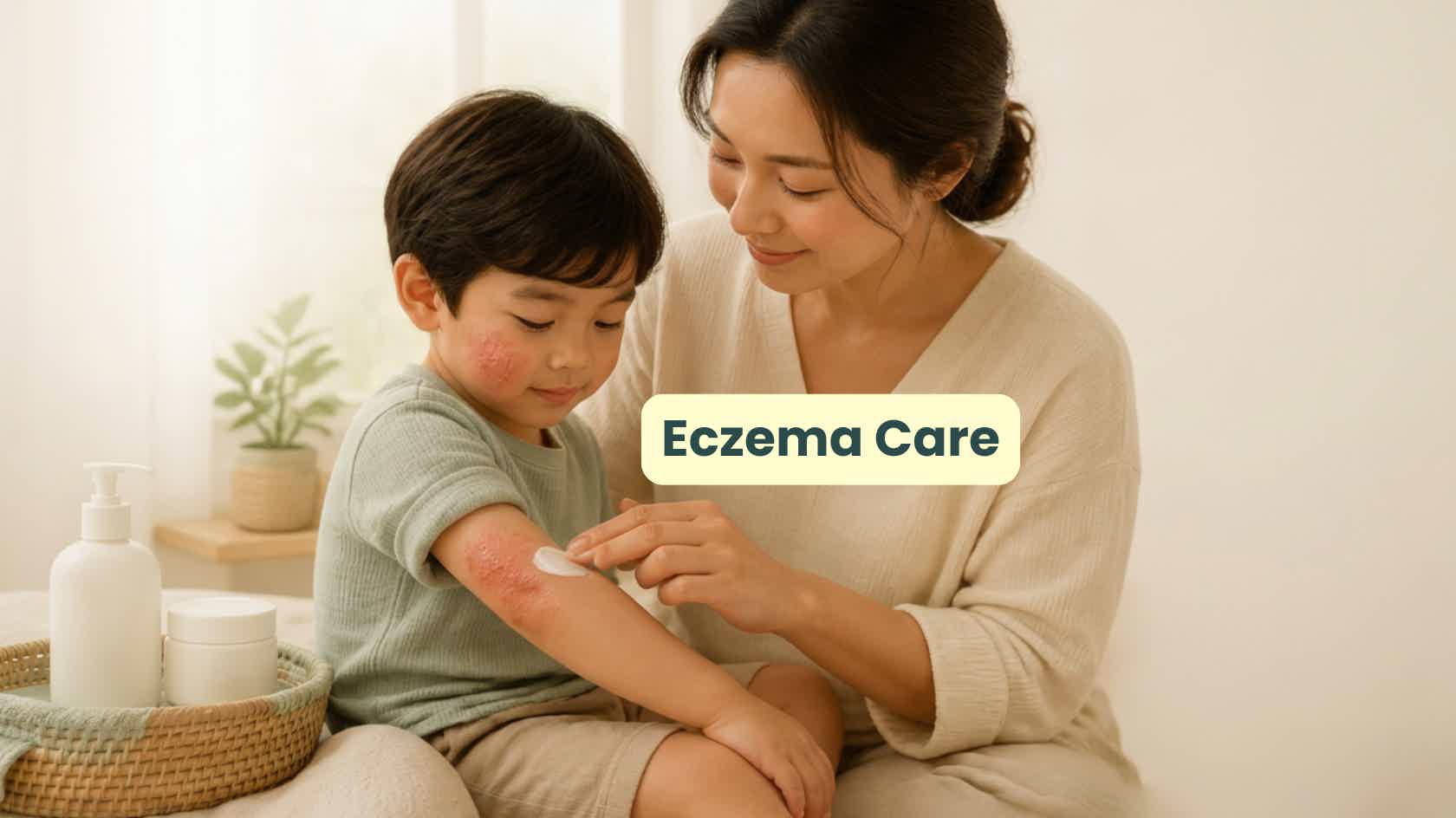
My Child Has Eczema — Should I Have Them Tested for Food Allergies?
If you're reading this at 11pm after another night of scratching, moisturizing, and wondering what you're missing — I see you. It's one of the most common questions parents bring to me:
"Could this be something they're eating?"
It's such a natural question to ask. When your child is uncomfortable and the creams aren't fully doing the job, you want a reason. You want something you can fix. And food feels like the most fixable thing of all.
As a naturopathic doctor and RN working with families across Barrie and virtually throughout Ontario, I help parents answer this question, which isn't a simple yes or no.
The answer is, "it depends," and it's worth understanding why before you spend money on a test or pull foods from your child's plate.
Let's walk through what the evidence actually says.
Is Eczema Caused By a Food Allergy?
Here's the nuance that often gets lost: food allergy shows up more often in kids with eczema than in the general population — especially when eczema is moderate to severe.
Up to one in three children with moderate-to-severe eczema also has a food allergy.
That's a real number. But it doesn't mean food is causing the eczema in most cases.
Most children with eczema do not have a food allergy at all, and food is rarely the main driver of the condition.
Here's something I find genuinely fascinating, and I think parents deserve to know it too: the relationship can actually run in the other direction.
When the skin barrier is compromised — which is exactly what happens with eczema — a child can become sensitized to food through their skin, before they've ever eaten it. Researchers call this the dual exposure hypothesis. In plain terms: the eczema may be feeding the food sensitivity, not the other way around.
That reframe matters, because it means the skin is often the place to start — not the plate.

When Food Allergy Testing Actually Makes Sense
I don't believe in blanket rules here, and neither do the major allergy societies (CSACI, AAAAI, and NICE all agree). Testing is a targeted tool, not a routine step.
It's genuinely useful in three situations:
1. Your child reacts right after eating a specific food.
Hives, swelling, vomiting, or trouble breathing within minutes of a food is a clear signal. This is the most clear-cut reason to test — usually a skin prick test or a blood test — and where results tend to be most reliable.
2. Moderate-to-severe eczema isn't improving despite genuinely good skin care.
If you've been consistent with moisturizers, topical treatments, gentle bathing, and trigger management, and things still aren't budging, focused testing may be worth a conversation. This typically applies to children under 5, and the goal is testing a handful of key foods — milk, egg, peanut, wheat, soy — not a broad panel.
3. Your child has ongoing digestive symptoms that don't fit the "allergy" picture.
Reflux, diarrhea, bloody or mucousy stools, belly pain, or poor weight gain that persist despite standard treatment can point to a non-IgE food reaction.
Here, the right approach is usually a supervised elimination of the suspected food for 2 to 6 weeks, followed by a careful reintroduction — not a lab test.
Okay, So Which Tests Actually Work?
Once testing is genuinely warranted, it's worth knowing there's a real hierarchy here — some tools are well-validated, and others just aren't, no matter how official they look on a lab requisition. Here's what the evidence actually supports:
Skin prick testing (SPT) is the workhorse of allergy testing, and for good reason. A tiny amount of food extract is introduced just under the skin, and a raised bump tells us your child's immune system has recognized it.
What I love about SPT is how reliable a negative result is — it's right 95 to 100% of the time, which makes it excellent for ruling allergy out. A positive result is a little less clear-cut, though: it tells us sensitization is present, not necessarily that your child will react if they eat the food. That's why I always read these results alongside your child's actual history, never in isolation.
Blood-specific IgE testing (sIgE) does something similar, just from a blood draw instead of the skin. It's especially useful when SPT isn't an option — say, your child's eczema is severe enough that pausing topical treatment isn't realistic, or they're on antihistamines that would blur the results.
Same rule applies here: a positive result means sensitization, not a guaranteed reaction, so context is everything.
The oral food challenge (OFC) is the true gold standard, and honestly, the most definitive answer you can get.
Under medical supervision (do not do at home), your child eats gradually increasing amounts of the suspected food while being closely monitored.
It's used to settle things once and for all when SPT or sIgE results are unclear, or to check whether a child has outgrown a known sensitivity.
It takes more time and coordination, but nothing else gives you a clearer answer.
Elimination followed by supervised reintroduction is the path for suspected non-IgE reactions (food intolerances) — the digestive symptoms I mentioned above.
The suspected food is removed for 2 to 6 weeks, and if symptoms improve and then return on reintroduction, that's your answer.
I always recommend doing this with guidance, ideally with a dietitian involved, so your child's nutrition stays on track the whole way through.
When Testing Isn't Helpful (and Can Actually Cause Harm)
This is the part of the conversation I wish more parents heard before they spent money or started restricting foods.
Broad food panels testing 90–100 foods at once are heavily marketed and easy to order online — but they carry a high false-positive rate and aren't backed by CSACI, AAAAI, or any major allergy body. A "positive" result on one of these often leads to food avoidance that was never actually necessary.
IgG "food sensitivity" tests are, frankly, measuring the wrong thing. IgG antibodies show that your child has eaten a food — that's a normal, expected immune response, not a sign of a problem. Some research even suggests higher IgG levels track with tolerance, not sensitivity. CSACI, AAAAI, and EAACI all recommend against using IgG testing to diagnose food allergy or intolerance.
Unnecessary food avoidance can genuinely backfire. This is the part that surprises parents most: removing a food your child was previously eating without issue can cause them to lose tolerance to it — meaning reintroducing it later carries a real risk of a true allergic reaction, including anaphylaxis.
CSACI and the Canadian Paediatric Society are both clear that keeping common allergenic foods (like peanut, egg, and milk) in a child's diet regularly helps protect tolerance, not undermine it.
And beyond the immune system, there's a quality-of-life cost too — unnecessary restriction can mean missed nutrients during a critical growth window, and it can turn mealtimes and birthday parties into a source of stress for your whole family.
So What Should Come First?
Before any conversation about food testing, my focus with families is always the skin barrier itself:
Moisturizing generously, at least twice a day and right after bathing.
Using prescribed topical treatments consistently and as directed.
Keeping baths short and lukewarm, with gentle, fragrance-free cleansers.
Identifying and reducing non-food triggers — fragrances, wool, harsh detergents, heat, and stress.
Most children see real, meaningful improvement from these steps alone. If eczema is still significantly affecting your child despite genuinely optimized skin care, that's the moment to have a focused conversation about testing — not before.
The Bottom Line
Food allergy testing isn't something every child with eczema needs. It's a precise tool for specific situations:
A clear immediate reaction to a specific food.
Eczema that isn't responding to consistent treatment.
Persistent GI symptoms.
Broad panels and IgG testing, on the other hand, tend to create more anxiety and restriction than answers.
If you're not sure which category your child falls into, that's exactly the kind of thing worth talking through with someone who knows their history.
I offer a free 15-minute Meet & Greet for families who want to figure out next steps together — you can book one directly through [my online scheduler].
This blog post is for informational purposes and doesn't replace personalized medical advice. If you're concerned about your child's eczema or possible food reactions, please connect with your child's healthcare provider or an allergist.
---
Frequently Asked Questions
Does eczema mean my child has a food allergy?
Not necessarily. Food allergy is more common in children with moderate-to-severe eczema, but most children with eczema do not have a food allergy. Skin care is almost always the first and most effective step.
Should I get an IgG food sensitivity test for my child's eczema?
No major allergy society — including CSACI, AAAAI, or EAACI — recommends IgG testing to diagnose food allergy or sensitivity. IgG simply reflects that your child has eaten a food before; it isn't evidence of a problem.
Can removing foods from my child's diet make things worse?
Yes, in some cases. Removing a food your child previously tolerated can lead to a loss of oral tolerance, increasing the risk of a true allergic reaction — including anaphylaxis — if that food is reintroduced later without guidance.
When should my child actually be tested for food allergies?
Testing is most useful when your child has had an immediate reaction to a specific food, when moderate-to-severe eczema isn't improving despite consistent skin care, or when ongoing digestive symptoms suggest a non-IgE food reaction.
Who can help me figure out if my child needs testing?
A children's health–focused naturopathic doctor or your child's allergist can help review your child's specific history and symptoms to determine whether testing is appropriate. If you're in Barrie or anywhere in Ontario, I offer virtual and in-person visits and a free 15-minute Meet & Greet to start that conversation.